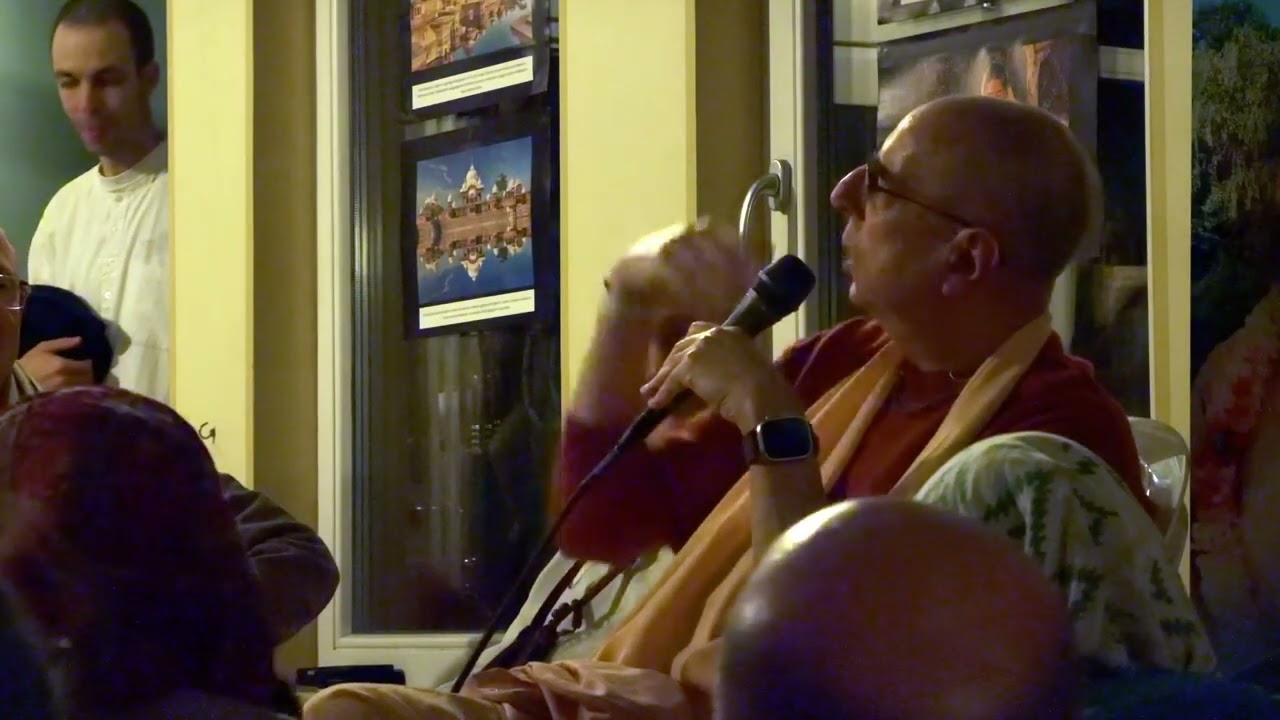
 HH Krishna Kshetra Swami
1,3 тис. підписників
·
1,3 тис. відео
HH Krishna Kshetra Swami
1,3 тис. підписників
·
1,3 тис. відео
- 1:08:36
- 112
- 11
- 0
- 03.04.2026
Опис
*The Austerities of the Mind*
In this lecture on Bhagavad-gita 17.16, HH Krishna Kshetra Swami reveals the true austerities of the mind—peacefulness, self-control, seriousness, and purity of consciousness. With deep spiritual insight, he exposes the restless mentality of modern life and shows how Krishna consciousness can elevate the mind from agitation to clarity, satisfaction, and genuine inner transformation.
With Spanish interpretation
Mar del Plata, Argentina
March 28, 2016
*Bg. 17.16*
मन:प्रसाद: सौम्यत्वं मौनमात्मविनिग्रह: ।
भावसंशुद्धिरित्येतत्तपो मानसमुच्यते ॥ १६ ॥
_manaḥ-prasādaḥ saumyatvaṁ_
_maunam ātma-vinigrahaḥ_
_bhāva-saṁśuddhir ity etat_
_tapo mānasam ucyate_
*Synonyms*
manaḥ-prasādaḥ — satisfaction of the mind; saumyatvam — being without duplicity towards others; maunam — gravity; ātma — of the self; vinigrahaḥ — control; bhāva — of one’s nature; saṁśuddhiḥ — purification; iti — thus; etat — this; tapaḥ — austerity; mānasam — of the mind; ucyate — is said to be.
*Translation*
And satisfaction, simplicity, gravity, self-control and purification of one’s existence are the austerities of the mind.
*Purport*
To make the mind austere is to detach it from sense gratification. It should be so trained that it can be always thinking of doing good for others. The best training for the mind is gravity in thought. One should not deviate from Kṛṣṇa consciousness and must always avoid sense gratification. To purify one’s nature is to become Kṛṣṇa conscious. Satisfaction of the mind can be obtained only by taking the mind away from thoughts of sense enjoyment. The more we think of sense enjoyment, the more the mind becomes dissatisfied. In the present age we unnecessarily engage the mind in so many different ways for sense gratification, and so there is no possibility of the mind’s becoming satisfied. The best course is to divert the mind to the Vedic literature, which is full of satisfying stories, as in the Purāṇas and the Mahābhārata. One can take advantage of this knowledge and thus become purified. The mind should be devoid of duplicity, and one should think of the welfare of all. Silence means that one is always thinking of self-realization. The person in Kṛṣṇa consciousness observes perfect silence in this sense. Control of the mind means detaching the mind from sense enjoyment. One should be straightforward in his dealings and thereby purify his existence. All these qualities together constitute austerity in mental activities.
⏱ Timestamps:
00:00 - Jaya Radha Madhava
10:43 - Introduction and Welcome to Mar del Plata
13:00 - Introduction to Bhagavad Gita Chapter 17 (The Divisions of Faith)
16:05 - Analysis of the Three Gunas (Modes of Nature)
21:15 - Understanding the Concept of "Faith" (Shraddha) in Different Modes
25:48 - Introduction to Austerity (Tapas)
28:03 - Reading and Translation of Verse 17.16: Austerity of the Mind
31:52 - Comparison with Chapter 16: The Three Gates to Hell (Lust, Anger, Greed)
33:30 - Discussion on the "Dark Triad" (Narcissism, Machiavellianism, Psychopathy)
39:40 - Deep Dive into Mental Satisfaction (Prasada)
42:50 - Gentleness and Simplicity (Saumyatvam) vs. Manipulation
45:51 - Gravity and Silence (Maunam)
47:46 - Story: Srila Prabhupada’s Compassion in London
49:50 - Self-Control (Atma-vinigraha)
51:53 - Purification of Existence (Bhava-samshuddhih)
54:31 - Essay Reflection: "Who is Crazy?"
57:20 - Q&A: How to apply these principles in daily life
1:00:40 - "Boiling the Milk": Focusing on depth in spiritual practice
1:03:42 - Q&A: Dealing with superficiality and encouraging others
In this lecture on Bhagavad-gita 17.16, HH Krishna Kshetra Swami reveals the true austerities of the mind—peacefulness, self-control, seriousness, and purity of consciousness. With deep spiritual insight, he exposes the restless mentality of modern life and shows how Krishna consciousness can elevate the mind from agitation to clarity, satisfaction, and genuine inner transformation.
With Spanish interpretation
Mar del Plata, Argentina
March 28, 2016
*Bg. 17.16*
मन:प्रसाद: सौम्यत्वं मौनमात्मविनिग्रह: ।
भावसंशुद्धिरित्येतत्तपो मानसमुच्यते ॥ १६ ॥
_manaḥ-prasādaḥ saumyatvaṁ_
_maunam ātma-vinigrahaḥ_
_bhāva-saṁśuddhir ity etat_
_tapo mānasam ucyate_
*Synonyms*
manaḥ-prasādaḥ — satisfaction of the mind; saumyatvam — being without duplicity towards others; maunam — gravity; ātma — of the self; vinigrahaḥ — control; bhāva — of one’s nature; saṁśuddhiḥ — purification; iti — thus; etat — this; tapaḥ — austerity; mānasam — of the mind; ucyate — is said to be.
*Translation*
And satisfaction, simplicity, gravity, self-control and purification of one’s existence are the austerities of the mind.
*Purport*
To make the mind austere is to detach it from sense gratification. It should be so trained that it can be always thinking of doing good for others. The best training for the mind is gravity in thought. One should not deviate from Kṛṣṇa consciousness and must always avoid sense gratification. To purify one’s nature is to become Kṛṣṇa conscious. Satisfaction of the mind can be obtained only by taking the mind away from thoughts of sense enjoyment. The more we think of sense enjoyment, the more the mind becomes dissatisfied. In the present age we unnecessarily engage the mind in so many different ways for sense gratification, and so there is no possibility of the mind’s becoming satisfied. The best course is to divert the mind to the Vedic literature, which is full of satisfying stories, as in the Purāṇas and the Mahābhārata. One can take advantage of this knowledge and thus become purified. The mind should be devoid of duplicity, and one should think of the welfare of all. Silence means that one is always thinking of self-realization. The person in Kṛṣṇa consciousness observes perfect silence in this sense. Control of the mind means detaching the mind from sense enjoyment. One should be straightforward in his dealings and thereby purify his existence. All these qualities together constitute austerity in mental activities.
⏱ Timestamps:
00:00 - Jaya Radha Madhava
10:43 - Introduction and Welcome to Mar del Plata
13:00 - Introduction to Bhagavad Gita Chapter 17 (The Divisions of Faith)
16:05 - Analysis of the Three Gunas (Modes of Nature)
21:15 - Understanding the Concept of "Faith" (Shraddha) in Different Modes
25:48 - Introduction to Austerity (Tapas)
28:03 - Reading and Translation of Verse 17.16: Austerity of the Mind
31:52 - Comparison with Chapter 16: The Three Gates to Hell (Lust, Anger, Greed)
33:30 - Discussion on the "Dark Triad" (Narcissism, Machiavellianism, Psychopathy)
39:40 - Deep Dive into Mental Satisfaction (Prasada)
42:50 - Gentleness and Simplicity (Saumyatvam) vs. Manipulation
45:51 - Gravity and Silence (Maunam)
47:46 - Story: Srila Prabhupada’s Compassion in London
49:50 - Self-Control (Atma-vinigraha)
51:53 - Purification of Existence (Bhava-samshuddhih)
54:31 - Essay Reflection: "Who is Crazy?"
57:20 - Q&A: How to apply these principles in daily life
1:00:40 - "Boiling the Milk": Focusing on depth in spiritual practice
1:03:42 - Q&A: Dealing with superficiality and encouraging others