 HH Krishna Kshetra Swami
1,3 тис. підписників
·
1,3 тис. відео
HH Krishna Kshetra Swami
1,3 тис. підписників
·
1,3 тис. відео
- 55:05
- 59
- 9
- 0
- 10.03.2026
Опис
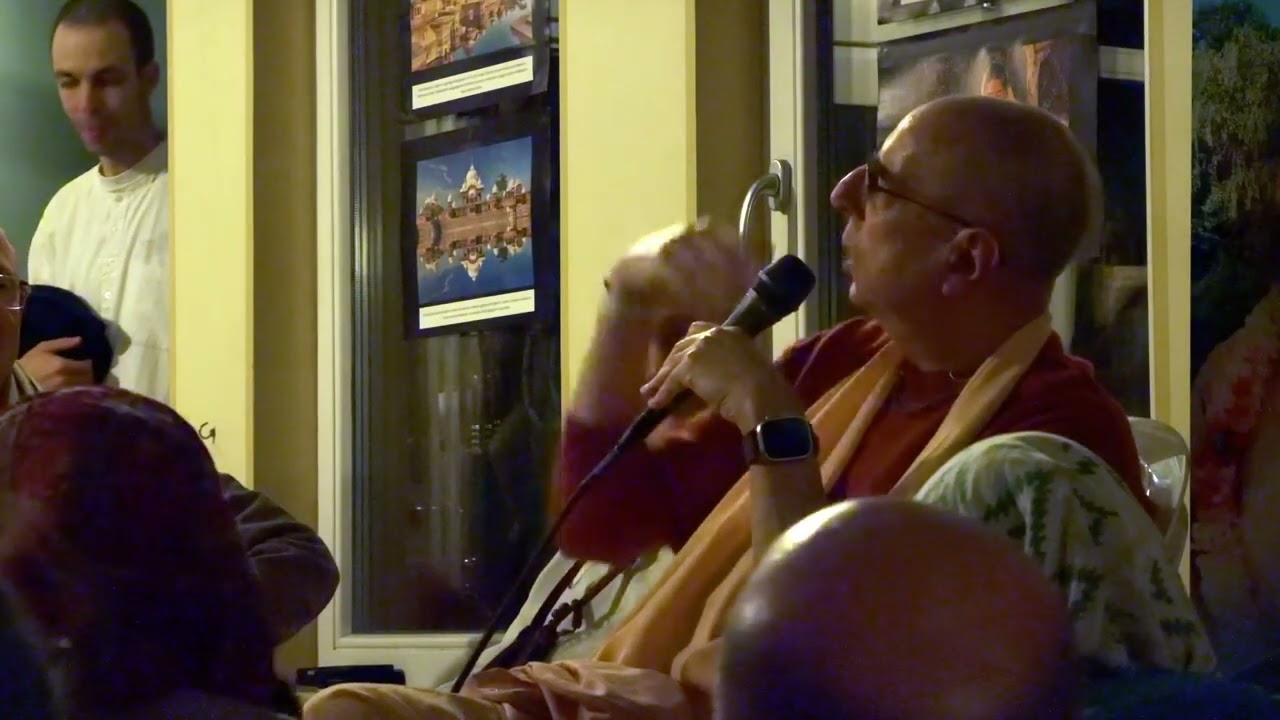
*Spiritual Strength in Times of Loss: The Secret of Tapasya*
Lecture on Śrīmad-Bhāgavatam 1.13.39
Exploring the departure of Dhritarashtra and the example of Queen Gandhari. The discussion focuses on the apparent paradox of grief and spiritual steadiness: how a devotee may feel loss yet remain strong through tapasya and spiritual understanding. Drawing from Bhagavatam and Bhagavad-gita, HH Krishna Kshetra Swami explains how austerity and detachment give the strength to endure and transcend life’s inevitable sufferings.
With Chinese interpretation
@iskconhongkong Hong Kong
March 5, 2026
*ŚB 1.13.39*
युधिष्ठिर उवाच
नाहं वेद गतिं पित्रोर्भगवन् क्व
गतावित: ।
अम्बा वा हतपुत्रार्ता क्व गता च तपस्विनी ॥ ३९ ॥
_yudhiṣṭhira uvāca_
_nāhaṁ veda gatiṁ pitror_
_bhagavan kva gatāv itaḥ_
_ambā vā hata-putrārtā_
_kva gatā ca tapasvinī_
*Synonyms*
yudhiṣṭhiraḥ uvāca — Mahārāja Yudhiṣṭhira said; na — do not; aham — myself; veda — know it; gatim — departure; pitroḥ — of the uncles; bhagavan — O godly personality; kva — where; gatau — gone; itaḥ — from this place; ambā — mother-aunt; vā — either; hata-putrā — bereft of her sons; ārtā — aggrieved; kva — where; gatā — gone; ca — also; tapasvinī — ascetic.
*Translation*
Mahārāja Yudhiṣṭhira said: O godly personality, I do not know where my two uncles have gone. Nor can I find my ascetic aunt who is griefstricken by the loss of all her sons.
*Purport*
Mahārāja Yudhiṣṭhira, as a good soul and devotee of the Lord, was always conscious of the great loss of his aunt and her sufferings as an ascetic. An ascetic is never disturbed by all kinds of sufferings, and that makes him strong and determined on the path of spiritual progress. Queen Gāndhārī is a typical example of an ascetic because of her marvelous character in many trying situations. She was an ideal woman as mother, wife and ascetic, and in the history of the world such character in a woman is rarely found.
Timestamps:
04:11 - Introduction to Srimad Bhagavatam, Chapter 13, Verse 39.
13:12 - Contextual background of the verse: The aftermath of the war and Dhritarashtra's departure.
20:53 - Analysis of Gandhari’s grief and her exceptional character as an ascetic.
27:17 - The significance of Gandhari blindfolding herself to share her husband's condition.
35:51 - Exploring the four levels of scriptural interpretation: Literal, Allegorical, Moral, and Anagogical (Hope).
43:56 - Discussion on how being a devotee helps in enduring and transcending difficult life situations.
51:11 - Defining Tapasya (austerity): The process of generating spiritual "heat" and strength.
54:16 - Closing reflections and a lighthearted story about different perspectives.
Lecture on Śrīmad-Bhāgavatam 1.13.39
Exploring the departure of Dhritarashtra and the example of Queen Gandhari. The discussion focuses on the apparent paradox of grief and spiritual steadiness: how a devotee may feel loss yet remain strong through tapasya and spiritual understanding. Drawing from Bhagavatam and Bhagavad-gita, HH Krishna Kshetra Swami explains how austerity and detachment give the strength to endure and transcend life’s inevitable sufferings.
With Chinese interpretation
@iskconhongkong Hong Kong
March 5, 2026
*ŚB 1.13.39*
युधिष्ठिर उवाच
नाहं वेद गतिं पित्रोर्भगवन् क्व
गतावित: ।
अम्बा वा हतपुत्रार्ता क्व गता च तपस्विनी ॥ ३९ ॥
_yudhiṣṭhira uvāca_
_nāhaṁ veda gatiṁ pitror_
_bhagavan kva gatāv itaḥ_
_ambā vā hata-putrārtā_
_kva gatā ca tapasvinī_
*Synonyms*
yudhiṣṭhiraḥ uvāca — Mahārāja Yudhiṣṭhira said; na — do not; aham — myself; veda — know it; gatim — departure; pitroḥ — of the uncles; bhagavan — O godly personality; kva — where; gatau — gone; itaḥ — from this place; ambā — mother-aunt; vā — either; hata-putrā — bereft of her sons; ārtā — aggrieved; kva — where; gatā — gone; ca — also; tapasvinī — ascetic.
*Translation*
Mahārāja Yudhiṣṭhira said: O godly personality, I do not know where my two uncles have gone. Nor can I find my ascetic aunt who is griefstricken by the loss of all her sons.
*Purport*
Mahārāja Yudhiṣṭhira, as a good soul and devotee of the Lord, was always conscious of the great loss of his aunt and her sufferings as an ascetic. An ascetic is never disturbed by all kinds of sufferings, and that makes him strong and determined on the path of spiritual progress. Queen Gāndhārī is a typical example of an ascetic because of her marvelous character in many trying situations. She was an ideal woman as mother, wife and ascetic, and in the history of the world such character in a woman is rarely found.
Timestamps:
04:11 - Introduction to Srimad Bhagavatam, Chapter 13, Verse 39.
13:12 - Contextual background of the verse: The aftermath of the war and Dhritarashtra's departure.
20:53 - Analysis of Gandhari’s grief and her exceptional character as an ascetic.
27:17 - The significance of Gandhari blindfolding herself to share her husband's condition.
35:51 - Exploring the four levels of scriptural interpretation: Literal, Allegorical, Moral, and Anagogical (Hope).
43:56 - Discussion on how being a devotee helps in enduring and transcending difficult life situations.
51:11 - Defining Tapasya (austerity): The process of generating spiritual "heat" and strength.
54:16 - Closing reflections and a lighthearted story about different perspectives.